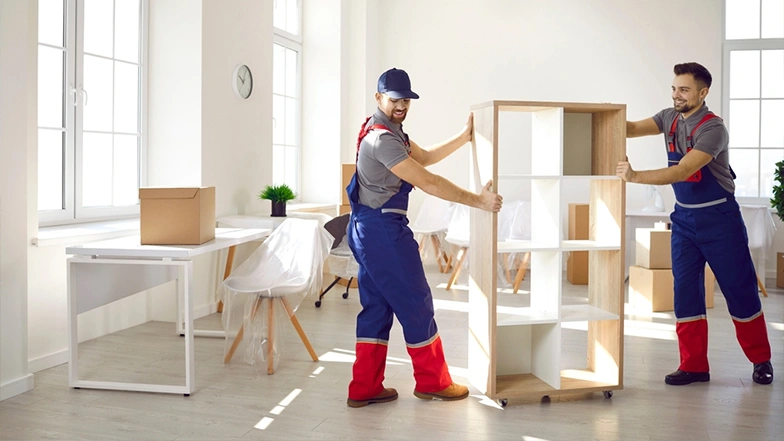
Moving furniture is not just about lifting heavy things, It’s about shifting a part of your life from one place to another—a process that is both physical and deeply emotional. Whether it’s a new sofa that doesn’t quite fit through the door, a beloved bookshelf that has been with you for years, or a bed that needs to be dismantled and reassembled, there is something about furniture that carries more weight than its materials suggest.
In London, where flats are small, staircases are narrow, and time is always in short supply, the task of office removals London and assembling furniture can feel overwhelming. You imagine you can do it alone, perhaps with a willing friend, until you find yourself stuck halfway up a staircase with a wardrobe that refuses to cooperate.
Table of Contents
ToggleThe Illusion of Simplicity
There is a quiet arrogance we all have when it comes to furniture. We think, “How hard can it be?” until we find ourselves staring at an instruction manual written in cryptic symbols, or watching helplessly as a seemingly sturdy piece collapses because one tiny bolt was left out.
Flat-pack furniture promises ease. It arrives in neatly packed boxes, full of promise. But then the true test begins. The screws all look the same but are fractionally different. The instructions assume a level of telepathic ability most of us do not possess. And just when you think you’ve put it together, there’s a leftover piece. You wonder—was it extra or have you doomed this structure to eventual collapse?
When removing furniture, this illusion of simplicity plays out differently. You assume everything can be carried out the door in one smooth motion. But you forget angles, door frames, the mysterious way furniture once fit into the room but now refuses to leave. Taking things apart is often inevitable, yet taking them apart in a way that allows them to be reassembled—without missing a single vital component—is an art.
Why We Hold Onto Things
Furniture is not just wood, metal, or fabric. It holds memories. The dining table around which conversations unfolded late into the night. The armchair where you read your favourite book one winter, wrapped in a blanket. The bed where you lay awake thinking about choices that shaped your life.
So, when it comes time to move, there is often a moment of hesitation. Do we take everything with us? Do we start fresh? London, with its transient nature, often forces people to make these decisions more often than they would like. Space is limited, rent is high, and moving is frequent. The idea of getting rid of a piece of furniture is not just a question of practicality, but of letting go.
There is relief too. There is a quiet joy in seeing an old, heavy piece go, knowing it no longer needs to be carried from one flat to another, up endless flights of stairs, through awkwardly designed corridors. There is promise in the empty space left behind, ready for something new.
The Battle with Space
London is not a city designed for oversized furniture. Walk down any residential street and you’ll see the remnants: a mattress leaning against a bin, a sofa abandoned on the kerb, a dismantled bookshelf waiting for a new life.
Anyone who has moved in this city knows the battle between furniture and space. The sofa that fit perfectly in the old flat but is impossible to get through the new door. The wardrobe that was assembled inside the bedroom and now won’t fit through the hallway when you need to take it out. Even professional removal teams have moments of disbelief when faced with the architectural puzzles of London homes.
This is where the skill of removals from London and assembly truly shows. Knowing when to dismantle, how to navigate tight spaces, how to carry heavy objects without damage—these are things you only learn through experience. And sometimes, a well-placed pivot, tilt, or removal of a single screw can mean the difference between success and disaster.
The Relief of Letting Someone Else Handle It
There is something deeply satisfying about handing over a problem to someone who knows how to solve it. Watching professionals manoeuvre a seemingly impossible object through a door with a calm efficiency that feels almost magical. What seemed inconceivable moments before suddenly becomes routine.
In a city where time is a luxury, there is something to be said for allowing someone else to do the heavy lifting—both literally and figuratively. The reassurance that no screws will be lost, no instructions misinterpreted, no door frames damaged.
For many, this is not just about convenience, but peace of mind. A smooth transition, a problem solved, an end to the stress of figuring it out alone. In a fast-paced city, it is one less thing to worry about.
The Endless Cycle
Furniture removal and assembly in London is not a one-time task. People move. Spaces change. Life shifts. The same bed dismantled today will be put together again somewhere new tomorrow. The same sofa that barely made it into one flat will make its awkward journey out again someday.
Each piece of furniture holds a small history of where it has been and the lives it has been a part of. Some pieces will be passed on, given a new home. Others will be left behind, no longer needed. And new furniture will arrive in their place, full of potential, waiting to be assembled into something that feels like home.
And so, the cycle continues.