

Table of Contents
ToggleThe Art of Taking Things Apart and Putting Them Back Together
Moving Day Dilemmas
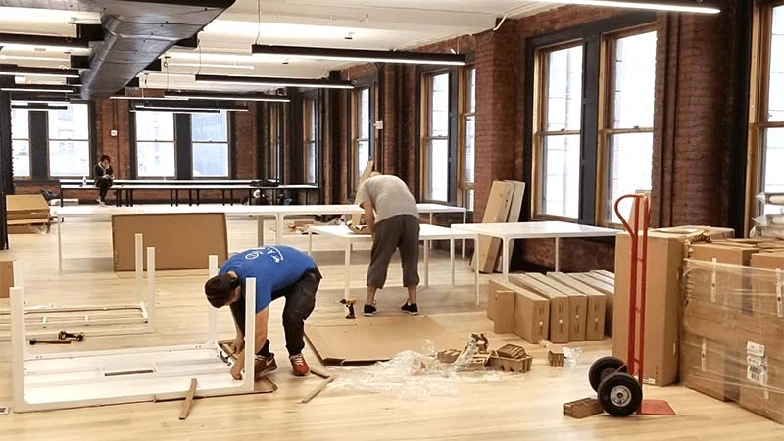
There’s a certain moment when you stand in an office filled with desks, chairs, shelves, and filing cabinets, and reality truly sets in. You’re moving. Or maybe you’re just reorganizing. Either way, what seemed like solid, immovable pieces of office furniture now need to be taken apart, transported, and reconstructed somewhere else.
If that thought makes you flinch a little, you’re not alone. There’s a reason most people push off this task until the last possible moment. It’s not just the physical labor—though that’s no small thing—it’s the mental challenge of ensuring every screw, panel, and connector ends up exactly where it’s supposed to be at the other end. This is where hiring a London removal company can make the entire process much easier and more efficient.
The Hidden Beauty of Complexity
There’s something oddly fascinating about disassembling furniture. At first glance, office desks and chairs seem simple, functional, and almost dull. But once you pick up a screwdriver and start detaching parts, you realize how much thought went into their design.
Each screw holds more than just two pieces of wood together; it holds a carefully engineered structure designed to balance weight and withstand years of use. Every bracket, every joint—someone, somewhere, had the task of figuring out the best way to make these parts fit in the most efficient way possible.
In essence, when we dismantle furniture, we’re peeling back layers of industrial creativity. It’s the office-furniture equivalent of taking apart a clock to see all the gears inside.
Taking Things Apart Without Losing Your Mind
Patience. That’s the first and most important thing. If you approach this task with frustration or impatience, it will find a way to humble you. A stripped screw, a stubborn bolt that just won’t budge, a piece that refuses to fit back the way it did before—it’s all part of the experience.
The key is to approach it methodically. Take a moment to examine the structure before you dive in. Which pieces are supporting others? What’s likely to collapse if removed first? If you rush in without a plan, you’ll soon find yourself drowning in a pile of unidentified screws and panels that no longer seem to match.
Labeling helps more than you might think. A bit of masking tape with a quick note can save you an enormous amount of time when reassembling later. Forgetting where each screw belongs might not seem like a big deal until you’re staring at leftovers and wondering if they were important.
The Strange Satisfaction of Destruction
There’s something oddly therapeutic about it, isn’t there? The act of undoing something, breaking it down into its individual components, reducing a solid, unmovable object into neatly stacked, portable parts. It’s like hitting the reset button—not just on the furniture, but on the space itself.
Seeing an empty room where desks once stood feels a bit like erasing old thoughts from a whiteboard. Suddenly, the space is new again, full of possibility.
The Puzzle of Putting It All Back Together
Of course, the real test comes later—when the moving is done, the transport is out of the way, and now it’s time to reassemble everything. This is the moment where you discover whether your earlier self was kind and careful or reckless and disorganized.
Reassembly is a puzzle. If done right, it feels like a seamless magic trick—everything slots into place, screws tighten exactly where they should, and you step back with a quiet sense of triumph. But if something is off—a missing bolt, an inexplicably wobbly desk—you suddenly understand why those tiny details mattered so much during disassembly.
And it’s not just about mechanics. There’s also the question of space. Offices never seem to have exactly the same layout twice. Maybe the desks don’t quite fit like they used to. Maybe the bookshelves that used to be flush against one wall now feel awkward and misplaced somewhere else. Maybe the new space has different light, different acoustics, a different energy.
The Idea of Rebuilding
Beyond the physical work, there’s something deeper going on here. Taking things apart and putting them back together is an unspoken metaphor for how we handle change in general. Offices move, teams shift, priorities evolve. And with every version of reassembly, there’s always a slight difference.
Maybe you take the opportunity to tweak things—placing desks in a more open arrangement, setting up the space to be more collaborative, or even ditching furniture pieces that no longer serve a purpose. It’s a rare chance to reconsider, rebuild, and rethink not just where things go, but how they function in our lives.
Something that was once fixed and unchangeable has now been broken down into its raw materials, allowing you to create something new from what once was. That’s a rather profound thing when you think about it.
When to Call in Reinforcements
Of course, not all office furniture makes for a good DIY project. Some of it is designed not to be taken apart easily—intricate boardroom tables, modular workstations, or heavy-duty filing systems that need more than just a screwdriver and a bit of optimism.
There’s no shame in knowing when to call in someone else. Professionals exist for a reason. They know the quirks of different assembly designs, they have the right tools, and they can save you hours of frustrated effort. There’s no bravery in wrestling with an uncooperative desk for half the day when a professional could have had it done in twenty minutes.
That’s why office removals in London are a popular choice for businesses looking to relocate efficiently. A team of experienced movers can ensure that furniture is dismantled, transported, and reassembled with precision, allowing employees to get back to work with minimal downtime.
The Final Moments
At the end of it all, when everything is finally back in place, there’s a quiet satisfaction that settles in. A subtle pride in knowing you navigated the chaos, dealt with the small disasters, and emerged on the other side with an office that functions once again.
There’s a rhythm to these things—a process that, when embraced, reveals something deeper about problem-solving, patience, and the art of making things work again.
And maybe, just maybe, next time you’re sitting at your desk, you’ll look at it a little differently—less like an object, and more like a structure of carefully thought-out parts, put together with effort, precision, and just a bit of human stubbornness.