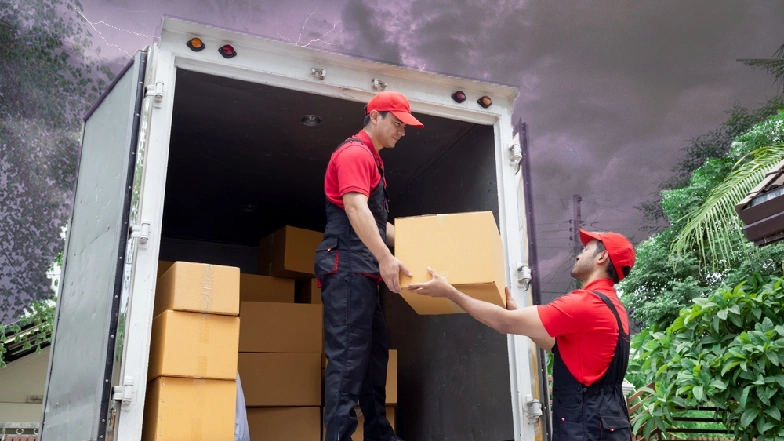
It begins with a box.
Not a grand moving truck or a team of strong-armed strangers shouting across stairwells. Just a modest cardboard box, one you’ve rescued from the local shop or bought in a bundle, now lying on the floor, open like a question mark. What do you take? What do you leave behind? This is the first real choice you make when you’re moving from one small flat to another with just a man and a van.
Downsizing—or upsizing just slightly—has become an oddly poetic event in our lives. For many of us living in cities, small apartments are where we piece together adulthood. And moving out of one feels both ordinary and important, both chaotic and clarifying. When you choose to move this way—small, slow, and with intention—you start to notice things. And not just the things you own.
Table of Contents
ToggleWhy Less Can Feel Like More
The first time I moved using just a man with a van, I felt something that surprised me: relief. There was no logistics team asking for a three-hour window between eight and eleven in the morning. No forms with microprint about damages and liabilities. Just one man—Jamie, in this case—leaning against his white van and smiling like an old friend, even though we’d just met. He asked if I was ready, and I genuinely paused to think about it.
The beauty of moving with only a van is you must be awake—awake to your life, to your space, and to your choices. Each item you pack earns its place. You pick it up. Hold it. This tea mug in my hand—is it worth the space on someone else’s shoulder? This stack of books—how many will I actually reread in the new place, honestly?
We’re all a little over-stuffed, aren’t we? With to-do lists. With knick-knacks. With digital clutter and emotional baggage we carry from one postcode to the next. But put yourself in a situation where space is precious—where it must be budgeted like money—and suddenly your life gets sharper. You see what you treasure. That’s the difference a personal, trusted London removals company can make—it turns moving from a chore into a moment of clarity.
Conversations That Surprise You
There’s something about sharing a car ride with someone that makes people talk. Maybe it’s the intimacy of going somewhere together—crossing a bridge, sitting in traffic, listening to a song neither of you chose but both accept. With Jamie, I found myself opening up during our short drive across town. Not in a confessional way, more of a slow unfolding. Like bread rising.
I asked about the longest drive he’d ever done (Leeds to Lyon, three countries, one dog). He asked if I always moved alone (yes, and not always literally). We talked about quiet neighbours, about how flat-pack furniture tests the true boundaries of optimism. There’s a rhythm to these exchanges. Not deep enough to feel vulnerable, but full enough to feel real.
What struck me most was the humanity of it all. Here was a stranger helping me carry my books, my plants, my awkwardly shaped lamp. Not for money alone—although yes, he was doing his job—but in the same way a neighbour holds a door open or brings in your post when you’re away. Underneath the transaction, there’s connection.
The Weight of Things
Carrying something is different to lifting it. When you lift, it’s a quick, practical task—up and over. But when you carry a box down three flights of stairs with another person, you feel the weight, not just of the object, but of the moments poured into it.
My last box to go into the van wasn’t heavy, but it had layers. A winter scarf knitted by someone I miss. Receipts from travels where I lost myself a little or found a new piece of me. A mug that never fits in any cupboard but which always comes with me, like talisman. Each item not only had weight—it had reasons.
And this is why a man with a van can feel more intimate than a full-service moving company. There’s no pretending this is a polished process. You’re sweaty, hair a mess, navigating a hallway with a bookcase that refuses to turn the right way. You make unspoken agreements with strangers: I’ll tilt and you lift. He’ll prop open the door. You don’t say thank you every time, but you feel it.
Making Space
Small apartments are tricky. There is a kind of ballerina grace required to live in them well. Your possessions must perform, must audition. That chair in the corner—does it justify the square footage it takes? Your blender, your second set of bedsheets, your bedside lamp that only ever shines halfway down a paperback page—each must prove its worth.
This is why moving from one small flat to another feels less like tearing down and more like pruning. You’re shaping something. You’re forming who you are and what your life looks like in the limited space you can call yours. And every move, no matter how many times you do it, is a new expression of that self.
When the van pulled up to my next flat, a narrow slice of a building with steps that felt like a riddle, we unloaded in a quiet sort of rhythm. Jamie passed me boxes like passing trust down a chain. By then, rain had started in that soft English way, more suggestion than weather. We didn’t rush. The pace lent itself more to observation than urgency.
I noticed how the hallway smelled like someone’s cooking. How the front door had layers of old paint, like tree rings. How the key slid easily into the lock—not resistance, but acceptance.
The Final Sweep
There comes a moment in every move when you look back at the empty room and are startled by its simplicity. All the things that turned it into a home are packed or gone. What’s left is light and shadow and a creaky floorboard near the window. You stand in that quiet like it’s a cathedral, maybe even whisper goodbye.
And then you go.
A Man and Van Oxfordshire don’t leave you with a glossy promise of reinvention. They don’t sell you on the dream of a fresh start. Instead, they offer something subtler: a bridge from one version of your life to the next. It’s up to you to build who you’ll be on the other side.
When Small Is Enough
There’s something deeply comforting about knowing your whole life can fit inside a van.
Not because you have so little—but because you’ve learnt to choose well.
Moving this way makes you more than just resourceful. It makes you honest. With yourself. With what you need. With what you’re not willing to carry anymore—emotionally and otherwise.
As someone who has moved more times than I can count—across cities, jobs, relationships—I’ve come to trust the quiet ceremony of packing a box, loading it carefully, and riding beside someone who only knows your name from an online booking form, yet treats you like you matter.
In a world that’s loud with options and obsessed with scale, there’s something revolutionary about going small. Not as compromise, but as clarity. Not humble out of caution, but out of confidence.
And so, if ever you find yourself in a transition—between love and solitude, between job chapters, or simply between council tax bands—know that starting again doesn’t need to be grand. The smallest moves, done with care, often shift the most within us.
That’s the true journey.
And it begins with a box.