

Table of Contents
ToggleFinding Space in a Cluttered World
My cousin Ellie came over last month, a fleeting visit squeezed between business trips and renovation meetings. She perched on my sofa, sipping tea, her normally calm face creased with weariness. “I think my books are eating me alive,” she half-laughed, gesturing at the towering boxes she’d hidden in her rented estate car.
Ellie’s situation was a familiar one: too many possessions, too little time, and no clear place to put anything. Her flat, undergoing unexpected delays with its rewiring, had become a maze of stacked memories, from inherited pottery to vintage coats. She needed somewhere to store things. But more than that, she needed mental and physical space to exhale.
She asked me about storage options, and I found myself musing—perhaps overthinking, as I often do—about what it really means to put your life in boxes. What we’re seeking, I believe, isn’t just a place to stash things. We’re looking for peace. And the choice between doing it ourselves or handing it all over for someone else to manage… well, that choice speaks volumes about how we live.
Wrestling with Control and Letting Go
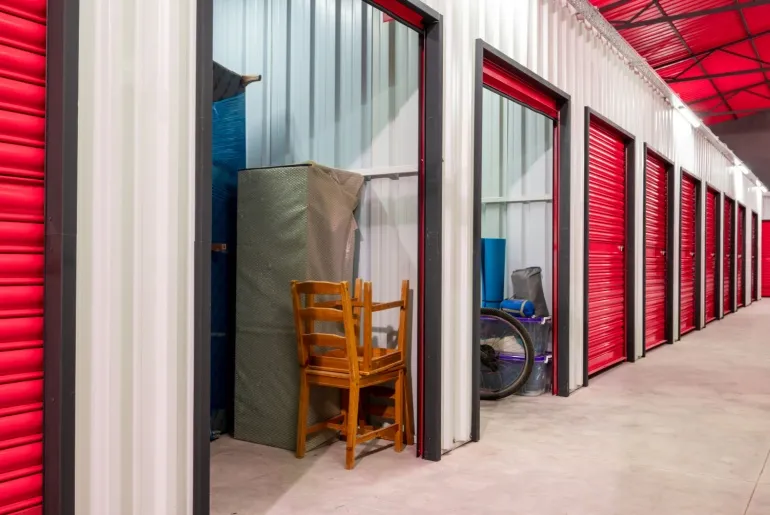
Let’s begin with what most of us picture when we hear “storage”: cold concrete corridors lined with unit doors, just big enough for what we can’t find room for at home. Self-storage is the DIY version of putting your life on pause. You hire a unit, load your things into it yourself, lock the door, and return as needed.
It’s simple, affordable, and honest. There’s a sense of control to it. You choose what goes in, what stays out, and when you visit. For people like my dad—a man fuelled by spreadsheets, always managing his world through checklists—it’s ideal.
But it’s also hard work. You hire a van, wrap your own glassware, heave boxes around like a poor man’s removal crew. If you’re emotionally tied to what you’re storing, every item becomes a decision, every old photo an hour lost down memory lane.
I remember moving house years ago and collapsing at midnight into a half-assembled bed because I refused to let anyone else touch my mother’s painting. It lives in my study now, sun-kissed and slightly crooked. Not once have I regretted being the one to carry it, but I do remember my back aching for two days.
Then there’s the other option—what some companies call full storage service. They collect your things, pack them with care, store them, and even return them when you need. It’s white-glove treatment, sometimes quite literally. A good friend of mine, recently back from a stint working abroad, described the team that handled her storage as “like quiet magicians”. She handed over a flat full of clutter; they returned a neatly labelled inventory two days later.
Whether you prefer to do it yourself or want expert hands to take over, London storage solutions now offer flexible options to match your needs. It’s tempting to see this as extravagant, almost lazy. But sometimes the most responsible thing we can do is ask for help—especially when life is already pulling us in so many directions.
The Cost of Convenience (and Peace)
Naturally, people talk about cost. And yes, full-service storage will usually lighten your wallet more than traditional self-storage. There’s transport, sometimes packing, insurance, and added handling.
But here’s where it gets thought-provoking. What’s the value of time? Energy? Sanity?
We live in an age obsessed with productivity, always “doing more in less time”. And yet, we often hesitate to outsource tasks that drain us. We’ll spend hours battling traffic to drop off furniture, even when that same time could be spent with our children, or reading, or simply catching our breath.
It’s not always about having the money. Sometimes, we’re reluctant to admit that we need help. That letting others in isn’t weakness, but wisdom. I’ve seen fiercely independent people reduced to frustration and injury, dragging wardrobes up narrow staircases that should never have been moved without assistance.
That’s why more people are turning to storage solutions in Oxfordshire that offer both convenience and peace of mind. So there’s the trade-off: where self-storage gives access and autonomy, full service offers relief and simplicity. Each route reflects a different approach to not just our possessions, but our priorities.
Objects That Carry Emotions
This might seem like a conversation about logistics, but of course, it never really is. Nobody rents a storage unit for the sake of it. We store things because of life’s transitions—births, deaths, moves, endings, beginnings. And all too often, the clutter in our physical space reflects the noise inside our minds.
After Ellie left, I thought a lot about the emotional weight of storage. About the dresses people hold onto for years after a wedding ends. About the teddy bears no adult admits they keep, or the university notebooks boxed up as proof of some version of ourselves we once were.
Sometimes, paying someone to take it all away is an act of kindness—not just to ourselves, but to the stories we’re not quite ready to discard. It gives us space to heal.
That said, there’s something honest and grounding about doing it ourselves. I’ve seen people weep while hauling their own boxes, but I’ve also seen transformation. Ownership. People sitting cross-legged on the storage unit floor, sorting what mattered from what didn’t, discovering lost photos or long-forgotten inspiration.
The benefit of doing it yourself is intimacy. You can’t pretend not to know what lurks in the attic if you’re the one wheeling it into storage. There’s real power in that.
The Psychology of What We Keep
There’s a quiet dignity in how we handle our belongings. We anthropomorphise them, infuse them with feelings. I’ve heard someone say, only half-joking, that giving your furniture to a storage company is like leaving your pet with a stranger. Will they treat it kindly? Will it be cold? Ridiculous—and yet not.
Marie Kondo’s enduring popularity hints at our need not just to declutter, but to connect. We want ceremony around our things. “Thank you,” we say, folding clothes before discarding them. “You’ve served me well.”
Maybe that’s what makes the full-service option so attractive to some. It feels like hiring professionals to do not only the lifting, but also the respecting. At Removals Company Pro, we understand that what we carry is more than just stuff—it’s memory, meaning, and pieces of your story.
Others recoil at the thought of someone else handling their memories—that stranger hands might drop grandma’s vase or mislabel grandad’s war medals. For them, the only logical route is self-storage, where no one interferes, and nothing disappears without trace.
Whichever option people choose, one thing is certain: storing isn’t about disowning. It’s an act of placing life temporarily on hold. A trust that in some near future, we’ll know what to do with the things we once considered vital.
The Elegance of Impermanence
What I find most resonant in this whole consideration is the beauty in its uncertainty. By placing things in storage—wherever or however—we’re accepting the transient nature of our lives. We’re saying, “I don’t need this right now, but perhaps someday.” It’s honest, fluid, forgiving.
Life changes. Quickly. A breakup turns into a new romance. A rented flat becomes a family home. A business dream becomes a closed chapter. And through it all, what we keep (and where we keep it) records our journey in tangible form.
We should allow ourselves more kindness around that. We don’t need to hoard everything, nor do we need to purge with ruthless finality. Storage lets us pause, regroup, breathe.
In the end, whether you drive across town to your own dusty unit, key in hand, or whether you schedule a professionally packed pick-up via an app, the purpose remains the same: to give yourself space—not just square footage, but mental clarity.
I called Ellie last night. Her renovations are almost complete. She ended up using a full-service option—found them online after we spoke. “It was like hiring calm,” she said. And there it was again—the linking of storage with peace.
“Did you keep the books?” I asked.
“Of course,” she laughed. “But they’re in categories now. I even found a few I forgot I loved.”
And maybe that’s the whole point. We store what matters. We return later, lighter. Ready.