

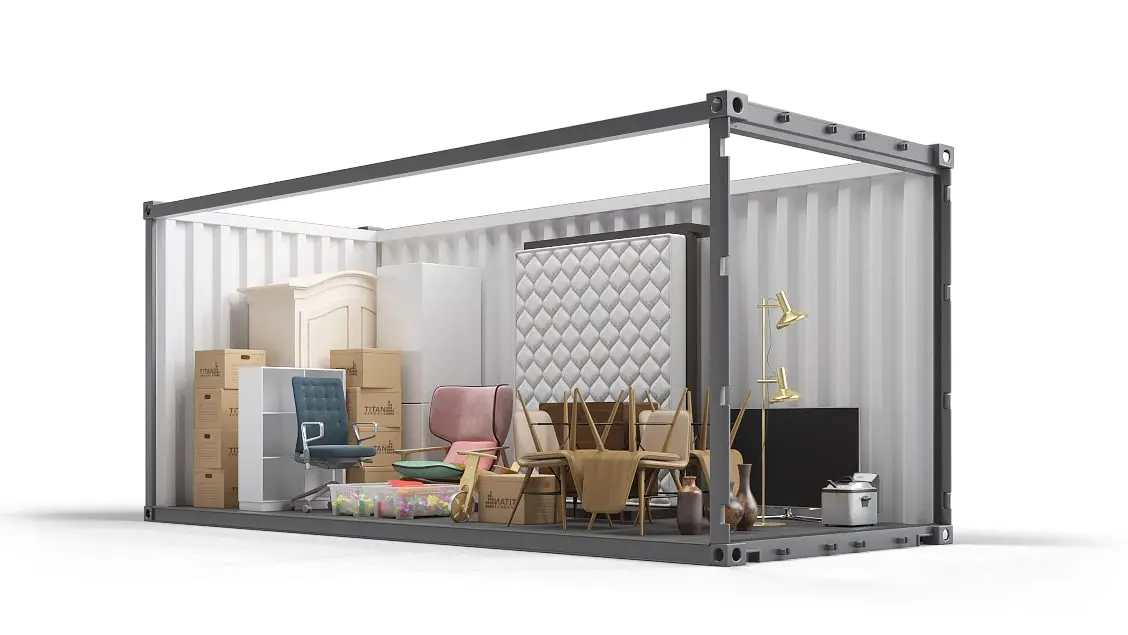
There comes a time in life when your belongings start to tell a story bigger than the space they occupy. You pick up a box of old photo albums, and suddenly you’re back under a summer sky in 2001. You hold on to your grandmother’s teacups, even though you never drink tea from them. Familiar shapes and scents connect us to memories we can’t bear to discard, yet they pile up, quietly demanding space we often no longer have.
If you live in London, this situation presents itself in sharper focus—where space is a luxury and every square foot comes at a premium. As the pace of life in the city surges forward, you may be forgiven for pausing to ask: What do we keep, why do we keep it, and how do we hold on without losing our minds—or our flats?
Table of Contents
ToggleWhen Four Walls No Longer Hold It All
I moved to London eight years ago with two suitcases, a bicycle, and an open heart. In my mind, I was coming to a city filled with ideas, music, and late-night conversations. When I unlocked the door to my first flat in Camden, reality softly whispered through the cracks. It was cosy, in the way that a bookshop is cosy—if all the shelves were also your furniture.
Over time, belongings multiplied. A growing stack of sketchbooks, records collected from market stalls, seasonal clothes, Christmas decorations bought on impulse, letters from old lovers—kept not because love lingered but because some part of me lived in those words. That’s the funny thing about memory and possession—they feed each other.
When the time came to move again, I realised how much meaning I’d packed into such a small space. Choosing a house removal company London residents trust made all the difference. It wasn’t just about shifting boxes—it was about transporting pieces of my story with care.
It wasn’t about hoarding. It wasn’t even about sentiment. It was about layers. I layered my life with meaning, and the items I kept were tokens of the experiences I couldn’t fold away inside me. But London didn’t make room for meaning. It made room for rent. Something had to give.
Making Peace with Letting Go—Sort Of
Letting go is a lesson that arrives many times in life. Sometimes, it whispers politely, other times it shouts during a move, a breakup, or a moment of quiet reflection at 2 a.m. when you open a closet and everything tries to fall on you.
I had convinced myself I could live minimally without giving up the past. I tried the usual rituals—donations, giving things away, throwing out. Still, some things clung to me as I did to them, both of us resisting evaporation. The solution arrived not as a breakthrough but as a question: What if I didn’t have to choose?
In a city that never slows down, where our lives are always in transition—between jobs, relationships, flats—it turns out that there’s a middle ground between keeping and discarding. Somewhere, a quiet room waits to hold your things for you, so you can live in the now.
The Strange Comfort of an Unvisited Room
A friend once told me storage was like “having a spare drawer in the universe.” At the time I laughed, but I’ve come to find a beautiful truth there. There’s something oddly comforting about knowing your belongings are safe, even if they’re not with you.
I remember the day I packed things away. I took time. I wrapped objects carefully, labelling boxes more accurately than I’d ever managed during any house move. Each item was chosen to sleep for a while. Not discarded, not forgotten. Just asleep. I didn’t know how long they’d stay there—and that was okay.
That’s the quiet reassurance London storage solutions offer. Not just a place to keep things, but a pause button for the parts of life that still matter—even if they’re not needed right now.
We often tell ourselves we must be ruthless to be strong. That growth requires release. And while that may be partly true, I believe there’s strength in the quiet decisions, too. The decision to set something aside—not because it has no value, but because it matters enough not to be squashed under the weight of new beginnings.
A City in Transition, and the People Who Grow With It
London has a story of movement. People come and go. Studios become shared flats. Couples separate. New jobs start, hobbies sprout, relatives pass away. All these changes bring physical echoes—extra things, or less space. Sometimes we make room in our hearts first, and then look for somewhere to store the life we’ve outgrown but can’t forget.
I met a woman once who stored her late husband’s fishing gear, not because she fished, but because it was the one part of him she couldn’t repurpose. She told me she went to visit it once a year. “They’re not just rods and nets,” she said. “They’re Saturdays on the coast, and the quiet way he whistled.”
That stayed with me. Storage isn’t about stuff. It’s a listening space. It’s a room that doesn’t interrupt. In some way, it is your past agreeing to wait patiently while you work on your future.
More Than Just Boxes
When we think of storage, it can seem faceless—a warehouse somewhere on the edge of town filled with dust. But in reality, it’s a deeply personal choice. It says, “This mattered. Still matters. But for now, I need space to breathe.”
I have friends who store musical instruments between tours. Others who box up winter clothes during London’s elusive summer. There’s the woman who put away all her children’s baby toys after they went to university—not to forget them, but to remember properly, when ready.
You can learn a lot about people by what they choose to keep safe and unseen. There’s bravery in that. A quiet defiance of disposable culture. It’s choosing preservation over hurried minimisation.
Redefining the Word ‘Home’
What makes a home in a city like London? Is it walls, or habits? A postcode or a postcode shared with others? Home, it turns out, is elastic. It stretches around the people and things important to you—even if those things are held in a place you only visit once a year.
I think of my storage unit like a chapter-break. It’s not the end and not the beginning, but it’s punctuation in the story of how I’m building my life. If I ever get truly stuck, I go there—not to retrieve things but to remember the person I was when I packed them away.
And there’s beauty in that. Because sometimes, revisiting the past is the only way to walk forward with clarity.
Conversations We Don’t Have About Space
It would be easier if space was talked about more simply. Not as a commodity to be bought or sold—but as something sacred. A kind of emotional architecture that shapes how we live and who we become.
In London, where space is often fleeting and borrowed, there’s a strange irony that sometimes we only learn its value when we pay monthly to store a part of ourselves outside of it.
But maybe that transaction, as pragmatic as it seems, also holds poetry. It lets us design lives in motion, with gentle pauses. It allows us to go small in our living arrangements without going small in memory or meaning.
It teaches us that sometimes, stepping forward means giving part of your life a room of its own. A secret, silent place that holds steady while everything else moves.
The Quiet Freedom of Knowing Nothing Is Truly Lost
Years from now, I might return to that quiet room full of my things and wonder at the choices I made. Some items may seem silly, or mysterious. Others will tug at the corners of my heart.
But that’s the hope, isn’t it? That even as the world changes, you don’t have to carry your whole past on your shoulders. You just have to know where you left it.
And one rainy Sunday, when the loudness of the present gets too much, you can visit it like an old friend — waiting patiently in the stillness, unchanged by time, holding space just for you.