

Moving house is often painted with a broad brush: stressful, exhausting, and messy. It’s true—packing up your life into boxes and saying goodbye to the familiar is rarely easy. But for me, it was the day I saw my grandmother’s dining table splinter at the corner as the removal lorry turned a sharp bend that stayed with me. That table had survived decades of family meals, countless celebrations and stories passed over steaming plates of food. It took one careless wrap and a bump on the road to leave a scar.
At Removals Company Pro, we understand that moving is more than a physical act; it’s emotional. Every item you own holds a whisper of who you are. The scuff on the coffee table? That happened during an all-night Monopoly game. The slightly faded armchair? That’s where you read bedtime stories, page after page, to a tiny voice that asked one more chapter, please. Protecting your furniture during a move, then, isn’t about keeping objects safe. It’s about holding onto the parts of our past we carry forward.
So much can go wrong in transit. Scratches. Cracks. Loose legs. Torn fabric. But choosing the right materials is like packing love around your belongings. It requires thought, effort, and just a little knowledge that goes beyond the standard rolls of bubble wrap.
Here’s what I’ve learned after many house moves—some smooth, some chaotic, all honest.
Table of Contents
ToggleWhat goes first matters most
Before we talk materials, let’s talk mindset. When you move, it’s tempting to throw things into boxes as quickly as possible. But the truth is, time spent preparing is time saved grieving later.
Furniture is awkward. It doesn’t fit neatly into boxes like books or glassware. It’s bulky, oddly-shaped, often heavier than we remember. And yet, it’s those pieces—desks, beds, chairs—that turn a house into a home.
Take a walk around your space. Look at your furniture like someone seeing it for the first time. What material is that bookshelf made of? Veneer? Solid wood? Is the sofa upholstered in linen or suede? Recognising what each piece needs is the first step to protecting it.
Because not all materials are created equal.
Old school secrets: blankets and towels
There’s something timeless about the wisdom of a grandmother. Mine used to say, before you go looking for fancy answers, check your cupboards.
Old blankets and thick towels are still, hands down, some of the best ways to protect furniture. They’re soft, dense, and most importantly, flexible. That flexibility is key when it comes to oddly shaped corners, armrests and chair backs.
If you’re preparing for a house removal in London, wrap an old quilt around wooden furniture like dressers. Fasten it with fabric straps or bungee cords. For dining chairs, swaddle each one in a thick towel. Secure it with tape, but mind this next bit: never let the tape touch the furniture itself. Tape can peel paint, mark wood, stretch fabric. Always secure on the fabric, not on the piece.
These materials work because they absorb impact. They cushion. And they breathe, reducing the risk of condensation damage on longer moves.
Modern heroes: foam padding and corrugated cardboard
There’s something quite satisfying about foam. It gives under your fingers, yet resists in a way that promises it’s taking the hit on your behalf.
Foam padding comes in sheets, rolls, and sometimes in custom inserts. For delicate wooden legs, almost nothing beats a bit of foam and cardboard wrapped tightly and tied. The foam absorbs vibration; the cardboard blocks scratches and punctures.
You can also use foam corners—an ingenious solution for tables and bookshelves. They’re designed to take knocks and prevent dings on sharp edges.
Corrugated cardboard might not seem revolutionary. But its humble layers catch and disperse force. Make your own protective panels by cutting up old boxes into flat sheets. Place them between stacked coffee tables, under chair legs, or on top of shelves. Think of them like shields—they’re going into battle so your heirlooms don’t have to.
Bubble wrap has its place—but not everywhere
Ah, bubble wrap. That oddly joyful pop it makes underfoot or under anxious fingers during long phone calls. It’s perhaps the most iconic packing material out there, and while it does have its place, it’s not always the solution people think it is.
Bubble wrap excels at protecting fragile items: mirrors, glass tabletops, framed art. These hard, breakable surfaces need cushioning that wraps snugly and absorbs impact.
But some people mistakenly wrap entire wardrobes or leather sofas in bubble wrap. Here’s the danger: bubble wrap doesn’t breathe. If moisture gets trapped between it and your furniture—especially on leather or polished wood—it can leave marks, or worse, foster mould. A protective layer beneath the bubble wrap (like a cotton sheet) solves this problem.
Use bubble wrap sparingly, intelligently. Let it protect what’s breakable, but don’t let it smother what’s not.
Stretch wrap: the cling film of furniture
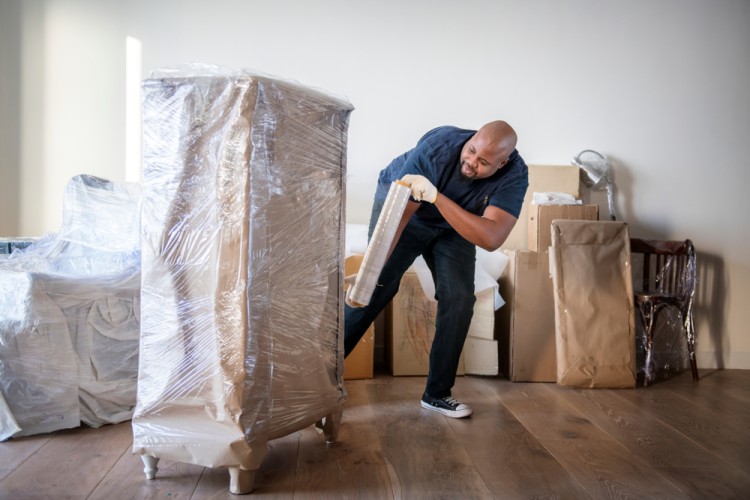
If you’ve seen plastic stretch wrap clinging to couches like a second skin, you know how beautifully it works. It’s particularly effective for holding protective layers in place and stopping drawers from sliding open or doors from swinging wide.
Stretch wrap (also called pallet wrap) is most helpful when moving parts must stay fixed. A chest of drawers? Wrap it tight—no need to unload every drawer. Just be sure the drawers aren’t too heavy, and test for movement.
But like bubble wrap, stretch wrap can be risky. Plastic on wood traps moisture. It’s the same sauna effect. So again, slip a breathable layer—sheet, towel, or fabric—between the furniture and the wrap.
Think of stretch wrap as the lock on a suitcase. It doesn’t protect from blows, but it stops unwanted surprises along the way.
Disassemble wherever you can
One memory from my last move: a bedframe that wouldn’t fit through the stairwell. By the time we realised, the movers were tired, and the scratches it got from being forced around the bend still make me wince.
Disassembling furniture isn’t exciting. It feels like going backwards. But what it really does is make your items smaller, lighter, easier to wrap properly and move safely. Take off legs, remove knobs, wrap those separately in small, labelled bags taped firmly to the main piece.
Even taking just one element off can make a huge difference. A table with the legs off is four easier wraps and a flat surface instead of a rectangular beast prone to tipping.
Labels, layers, and love
There’s an emotional investment in packing carefully, no doubt about it. But moving is about trust. Trusting that what you’ve loved will be safe. Trusting that you’re not just letting go, but stepping forward.
Label every item. Not just boxes—furniture too. If a chair has a loose joint, write that down. If the coffee table top lifts off, tape a note. When someone else is lifting for you, they can’t read your mind, but they can read your handwriting.
If you’re using professional packing services in Oxfordshire, these small details can make a big difference. Experts will appreciate the extra care and will handle your belongings with greater understanding.
Wrap in layers. First, soft cloth to prevent scratches. Then cushioning—foam or cardboard. Then holding layers like stretch wrap. Each part serves a role, like a tiny team guarding your memories.
And above all, think with the heart. This isn’t just a mattress—it’s where your child jumped, even when they weren’t supposed to. This isn’t just a sideboard—it’s where hot dishes sat while you laughed about burnt stuffing.
Final reflections
I’ve grown to love moving—not for the stress, but for the clarity it brings. You get to choose what stays with you. You touch every book, every vase, every photograph. You remember. And then you protect.
The best materials for protecting your furniture aren’t necessarily the most expensive or high-tech. They’re the ones chosen thoughtfully, wrapped carefully, fastened with patience.
Because in the end, our furniture tells our stories. The way we protect them is the way we honour those stories, even as we write the next chapter.