

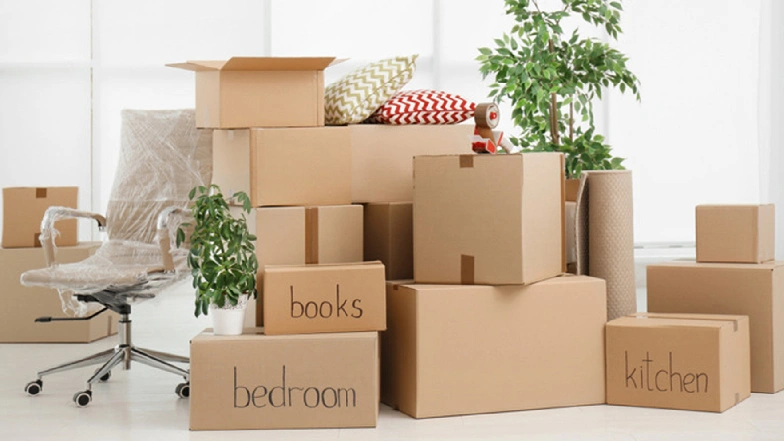
During one particularly grey morning, halfway between coffee and chaos, I found myself standing in the hallway of my soon-to-be-empty flat. Around me were brown, square boxes—anonymous, silent, and, most disturbingly, all looking exactly the same. Somewhere among them was the kettle. Possibly the salt. Certainly the cables I told myself I wouldn’t misplace this time. And yet there I stood, staring into a cardboard sea, utterly clueless.
That was the moment I realised I had not simply packed—I had buried. Buried items, buried logic, maybe even common sense in my rush to get everything taped up and “done.” No one tells you this, but moving isn’t just a physical act. It’s a mental sort of archaeology, especially if you leave no map behind.
This is where a professional London removal company can make all the difference—bringing not just muscle, but method.
So let me try to offer a map. One that can help you not just move your belongings, but carry your sanity along with them.
Table of Contents
ToggleWhy Labelling is More Than Just Labelling
It’s curious, really. Think of all the times we label things in life. Not just boxes, but ideas, relationships, and memories. A label is a way of telling ourselves, “I know what this is.” It gives us structure. It creates boundaries. In this way, labelling moving boxes is a small, tangible expression of order in the midst of chaos. You’re asserting that things can make sense, even during a time that often feels like anything but.
When done correctly, labelling your boxes becomes a profound act of self-respect. You’re not just doing a future you a favour; you’re showing that where things go—and your time, effort, and memories—matter.
Begin Before You’re Ready
I understand the temptation: wait until every drawer is emptied, every cabinet inspected, and all your worldly possessions are stacked neatly in uniform boxes before you touch the marker pen. Don’t. Begin the moment packing begins. As soon as one box closes, label it. The human brain has a strangely accurate yet fuzzy grasp on what’s just been packed. But in even a short while, it will betray you.
Labelling early is your hedge against forgetfulness. The moment you close a box, you’re no longer thinking about its contents—you’re focused on the next one. Trust that. Use a label before your brain convinces you it will “just remember.”
Be Specific Without Being Weird
A box that says “Kitchen” tells you little. It might contain pots. Or coffee. Or fuses you’d once hidden in the bread bin because they “belonged somewhere.” The magic is in being precise, but not excessive. Instead of “Kitchen,” try “Kitchen – Baking Tools + Rolling Pin” or “Kitchen – Teacups, Spoon Set, Electric Whisk.”
You’re drawing a mental image of the box from the outside. Imagine needing something—say, your favourite teacup—and asking, “Which box is that in?” The answer should be straightforward. Otherwise, you’re once again digging through mystery boxes like a late night game of hide and seek.
At the same time, avoid creating a narrative on the box: “Things I might need but probably won’t until I’m emotionally settled in.” That’s unhelpful, even if technically accurate.
Establish a Labelling System—and Stick with It
People with creative minds (and I suspect you are one) tend to label freely, based on mood and moment. The first box might say “Living Room – Plants + Books,” the next, “Stuff that fits there” or “Random things Friday.” Avoid this gentle descent into anarchy. Create a system before you start—location in the house, type of items, priority—and return to it every time.
One useful method includes:
1. Room
2. Item type
3. Priority (e.g., open immediately, can wait, seasonal)
So your box might say: “BEDROOM – WINTER CLOTHES – LOW.” Or: “BATHROOM – ESSENTIALS – HIGH.” You will thank yourself when you’re standing in your new place, surrounded by twenty boxes and two hours of energy left.
Use Colour If You Think Fast, Write If You Remember Slow
Here’s a helpful way to think about your own memory: Are you a colour person or a word person?
If you process the world visually and quickly, use coloured tape or stickers to mark different rooms or categories. Red for kitchen, blue for bathroom, green for living room. You’ll distinguish boxes at a glance, no words needed. This is efficient if you move with pace and don’t mind opening one or two boxes by mistake.
If you rely more on words, emotions, and mental filing systems, better to be precise with a pen. Take a few extra minutes and describe what’s inside. Your brain will appreciate the detail when exhaustion dulls your instincts.
This simple technique can make any house removal London process smoother, giving you both clarity and control when it matters most.
Some people do both, quite happily. A coloured label and a short description give you both speed and clarity.
Keep a Master List, But Don’t Worship It
The idea of a master list—an orderly document with each box numbered and contents listed—is appealing. Especially to sensible people who own clipboards or print checkboxes. You can do this, and it works. Number each box and keep a corresponding list where Box 1 contains “Books – Non-fiction,” Box 2 has “Bedding (summer),” and so on.
But here’s the caution: do not turn the master list into a religion. If you mislabel Box 18 or skip writing down Box 23, the world hasn’t ended. Don’t let perfectionism prevent you from doing something pretty good.
Keep your list as a companion, not a supervisor. It should help you, not judge you.
Label the Top and at Least One Side
In your mind’s eye, you probably see all boxes neatly stacked with labels perfectly facing outward. Reality is messier. Some boxes will be upside-down; others shoved sideways in a van or turned to the wall. That’s why it’s not enough to label just the top.
Put your label on the top and on at least one side. That way, no matter how the box is arranged, one label will be visible. If you’re feeling particularly attuned to future-you’s plight, label two adjacent sides and the top.
It’s a thoughtful detail that won’t take much extra time but will bring disproportionate relief later.
It’s Fine to Have a “Miscellaneous” Box—Just Don’t Have Ten
There comes a point—usually in the final hours of packing—where your resolve breaks. Items that once had meaning and function become orphans: a lonely charger, a rogue candle, half-used batteries. These often get swept into a box scrawled with “Random,” “Bits,” or “Stuff.”
It’s fine. It’s human. But limit yourself—one box of chaos. Not ten. Resist letting exhaustion dump every “unknown where to put this” item into random boxes. You’ll deal with the pain later when none of the cables work and the potato peeler’s gone missing.
If you do create such a box, label it honestly: “Miscellaneous – Chargers, Bits + Lost Souls.”
Don’t Underestimate the Emotional Luggage
Labelling doesn’t seem emotional, but it is. Every item placed in a box carries a tiny history. The jumper you’ve outgrown but can’t throw away. The tea set your grandmother gave you. The scribbled notes from an old notebook. You’ll find yourself stopping mid-pack, staring at something trivial and yet somehow affecting.
Allow yourself that time. Label boxes slowly if you have to. Let your memory surface, recognise it, and pack it carefully. When we move, we don’t just transport objects—we carry forward the shape of who we’ve become.
So the labels aren’t just for you to find things. They’re little conversations with parts of yourself.
Let the Last Labels Be Kind
Your final boxes will likely contain the last traces of your old life: kitchen cloths still slightly damp, the final spoon, the books stacked by your bed. Label these last. But don’t just write “LAST BOX.” Try something warmer.
“Final kitchen comforts” or “Leftover bits of home.”
You’re not closing a chapter as much as folding down a page’s corner. You’ll return to that memory later, whatever the new chapter holds.
When You Finally Unpack
The truth is, some boxes will stay unopened longer than you expect. Weeks, months, maybe even years. But when you finally slit open that taped edge and look in—exactly as you hoped you would—it feels like a small triumph. You, on some tired Saturday, anticipated the needs of future-you. And you delivered.
There is a quiet beauty in that.
So pack thoughtfully. Label clearly. Move gracefully. Because behind every box is not just a thing, but a story—and you’re carrying more than just furniture. You’re carrying the narrative of your life, from one place to the next.
Consider giving it the labels it deserves.