

Table of Contents
ToggleMoving House Without Breaking Hearts (or Plates)
There’s a peculiar feeling that settles into your chest when you hold something delicate in your hands. Maybe it’s your grandmother’s tea set, its fine bone china worn smooth by decades of family stories. Or perhaps it’s the blown glass vase you bought on your honeymoon, absurdly expensive, absurdly precious. These things aren’t just things. They’re moments, they’re history, they’re part of who you are.
And when it comes time to move, the thought of losing one of them – smashed beyond saving in the back of a removals truck – can be surprisingly emotional. That’s why choosing a reliable team for House Removals London is so important when you want your most treasured possessions treated with care.
It’s not about the money. It’s loss in its purest, smallest form. Fragile things demand respect. And when we move, we don’t just pack objects – we pack lives.
So let’s take the time to do it properly.
Objects That Tell Stories
Look around your home. Some items are practical. The blender, the bookshelves, the vacuum cleaner. These are easy to bubble wrap and box up. But the fragile things – they’re the ones you remember. That clock your mum gave you when she downsized. The whisky tumbler with the chip in the rim you’ve never managed to throw out. Your child’s clay dinosaur – delightful in its ugliness.
They tell stories. Small stories, mostly. But in a world that often moves too fast, those small stories matter.
That’s why packing them deserves attention. Not just to preserve their physical shape, but to honour their place in your life.
Start Early: Give Time to the Sentimental
There’s some irony in how disorganised we become when organising a house move. Between notifying the utility companies, finding a new cat flap, and remembering where you stashed the spare keys, the panic creeps in.
But fragile items aren’t something to squeeze in at the end when you’re already exhausted. They need time. Rushing is their mortal enemy.
Begin with them. As soon as you’ve got your moving date, even loosely confirmed, start packing these items. Choose a quiet weekend morning, make tea, take your time. It’s almost therapeutic – a form of mindfulness. You’re forced to slow down. And in that slowing down, you appreciate again where these objects came from, and the roles they’ve played.
Practicality meets reflection. And it’s surprisingly nice, in the middle of a chaotic move, to find those little rituals.
The Right Materials Make All the Difference
It’s tempting to think you can make do with a few old newspapers and some flimsy boxes from behind the supermarket. But this isn’t the place to cut corners.
You don’t need anything extravagant. Just the right things:
– Strong, double-walled boxes in a few different sizes
– Packing paper (clean and dye-free is better than newspaper)
– Bubble wrap (yes, clichés are clichés for a reason)
– Packing tape (don’t skimp – cheap tape peels like a sunburn)
– Labels – ideally bold ones, or stickers that shout “FRAGILE”
– A marker pen, thick-tipped, so it’s unmistakable
There’s a quiet confidence that comes with having everything ready. Boxes stacked neatly. Materials within reach. Like preparing to cook a favourite dish – you know the ingredients, and you know that done right, good things will follow.
Pack With Layers, Like You Dress for Winter
You know those cold January days when you step outside and the wind slices through you? What do you do? Layers. The same logic applies here.
Line the bottom of each box with a thick cushion of crumpled packing paper. Not folded neatly – that’s not the point. Crumpled paper creates air pockets. Movement will happen, but damage doesn’t have to. These air pockets absorb the shock your items can’t.
Wrap each piece individually. Be generous. That’s the rule. A mug gets a few sheets. A plate gets the same. Glasses? Start by stuffing paper inside, then wrap the outside like you’re swaddling a child.
Larger delicate items – like mirrors or framed photos – deserve a bit more thought. Cross two strips of masking tape across the glass. This isn’t to stop it from breaking, but to stop shattered glass from going everywhere. Then wrap with bubble wrap and position vertically in the box – not flat. It’s less about superstition and more about physics: vertical things absorb pressure better.
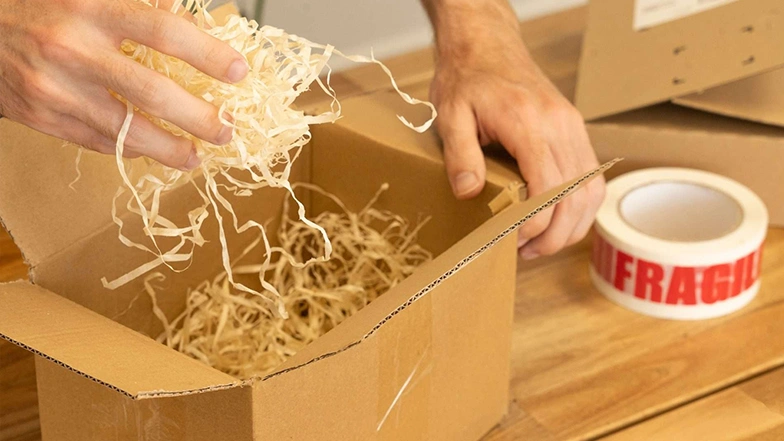
Once full, the top gets another paper cushion. Not tight. Just enough to stop movement. Close the flaps, tape securely, and label with something calligraphic and unmistakable: FRAGILE – THIS SIDE UP.
And maybe add something extra beneath it. “Please handle with care – my memories live here.” Because kindness often starts with a reminder.
The Tetris of Transit
No matter how well you’ve packed your fragile items, they still have to survive the journey. So, what’s next matters too.
Boxes marked “fragile” shouldn’t go on the bottom of anything – even if they’re heavier than the one above.
Even more important: don’t let them rattle around alone. Loose space means sliding. And sliding means breakage.
If you’ve hired professionals, have a word with them. Tell them what’s inside. Show them which boxes are most precious. Don’t be shy about it. When people know objects matter to you, most of them naturally show more care.
And if you’re loading the van yourself, think of it like building a wall. Fritz Lang-level precision isn’t necessary, but balance is. Fragile boxes grouped together, snugly packed with blankets or duvets cushioning the gaps.
It’s not just transit. It’s arrival. Everything you do here sets the tone for how things will be when they land in their new home.
Children, Curiosity, and Other Unexpected Hazards
People often forget what happens on the unpacking end.
You’ve made it. The van’s unloaded, the key’s turned in the door, and friends stop by with champagne or pizza. There’s laughter, children bouncing off the walls, the dog knocking over a lamp.
But what happens to those fragile boxes now tucked in the corner?
They can’t live there forever. So plan for their safety, even in the temporary chaos.
Don’t leave them stacked high. Don’t put them near heaters or windows. And whatever you do, don’t leave them in the middle of a hallway – the universe thrives on the slapstick of misplaced trust.
Instead, designate a quiet room if you can. Make it off-limits to children and pets. Let those delicate things rest safely until you can give them the attention they deserve.
Because unpacking them is its own ceremony – not a chore.
Rebuilding the Familiar
Eventually, you’ll unwrap that plate again. The one you inherited. Or that glass you thought might not survive. And when you place it on the shelf in your new kitchen, you’ll feel it – not just relief, but continuity.
Moving doesn’t mean leaving everything behind. It’s transplanting roots.
And the safe arrival of something delicate bridges what was with what will be.
Behind every piece of glassware lies trust. Trust in your own hands, trust in the process. And, yes, a bit of help from some bubble wrap—and a London removal company that understands the true value of care.
Most things in life are robust. They survive knocks. They keep going. But the fragile things? They’re the ones that call on your care. They’re reminders of how vulnerability can hold beauty.
Handle them with thought and intention. Let them remind you of the importance of gentleness in a world that often rushes. And, as with most good things in life, it starts with paying attention.